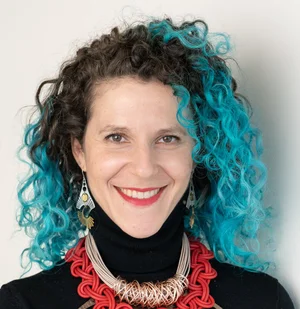
A previous iteration of my business cards from way back in 2017.
For years, I’ve referred to myself as a museum adventurer.
Regardless of what my official job titles have been, adventurer is a title I’ve given myself.
There might be people in the world whose formally assigned job titles include the word adventurer, and I’m guessing they probably do some sort of work that involves traveling, perhaps to hard-to-reach places. I certainly love traveling, but for me, it’s not so much the movement as the spirit the word adventurer carries that makes me hold onto it. It’s the flavor. The élan. Adventuring is an action, yes, but it’s also an attitude, and that attitude is what I try to bring with me across all spheres of my life.
The way I define adventure in my life (and on my website) is:
an exciting, unusual, and sometimes dangerous experience
I love every bit of this definition. I want my personal adventures and the adventures I design for others to have that electrifying sense of resonance and surprise that can only come when you’re deeply connected. I want to be part of making experiences that push me and my fellow adventurers productively outside our comfort zones, right up to our learning edges. I want experiences that will make us feel tingly or warm or refreshed or zapped or soothed or light, or some other somatic, embodied feeling that roots us right there in that moment, individually and together.
I’ve written about some of the adventures I’ve made that seek these visceral responses. You can see some examples of what I mean when I say “make an adventure” at my Eclectic Adventures page. When I use that phrase, I’m talking about approaching the design of a new program/series/gallery/experience as something exciting and unusual and just maybe dangerous. For years I’ve been very forthcoming about how one of the major goals of my museum education work has been to give people unexpected experiences; for people to leave the space thinking, ‘I never knew I could do that in a museum.’
But museums, of course, are problematic faves at best. It’s hardly news, but it’s always worth repeating that museums around the world are physically and conceptually built on legacies of colonial imperialism, patriarchal wealth inequity, and systemic racism.
The starry-eyed excitement I first felt as an undergraduate art history student learning about craft and beauty is still in me, and I don’t want to diminish it. I am deeply appreciative of the privilege and wisdom I carry with me to be able to walk into a museum anywhere I am—whether or not I can speak the language or read the text on the walls—not only with comfort and curiosity, but with eagerness. With my sense of adventure pinging.
All that said, I’m no longer able to plead ignorance of the deeply ugly histories of collecting and display that so many institutions are still trying to sweep under the rug. Now I know how to read a museum label and reflect on the year an object was acquired or who donated it or where it came from. I know how to think critically about what histories might be elided in those staid little tombstone texts. Did this object come here before or after the UNESCO Antiquities and Art Treasures Rules of 1973? How did the person who donated this object acquire it? and how did they make the money that funded their collecting and cultural patronage? Did the people whose land this object comes from give permission for it to leave? Do they want it back?
This questioning is an intrinsic part of my work in the worlds of art and culture, and I can’t separate them from my enjoyment of the stuff. I don’t want to separate them. Because all these thorny complications are part of the adventure, for me.
They’re part of the deeper questioning, sadness, anger, and disappointment that often accompany the joy, inspiration, and satisfaction of getting to know an artwork. I’ve included a wonderful example here from the Met Museum’s collaboration with one of my favorite podcasters, Nate DiMeo of The Memory Palace, who added layers of complexity onto the interpretation of artworks with beautiful aplomb.
When we know these layered stories about an object, it’s like we’re able to unlock a higher level of interaction with each other and with the object itself. We’ve made it past our initial observations and our polite small talk, and we’re able to do the kind of deeper connecting that turns casual acquaintances to lifelong friends.
This is the “sometimes dangerous” region of my adventure definition. These deeply layered stories of pain and triumph and uncertainty that objects and museums can tell us aren’t easy or comfortable, but they’re vital. They’re necessary. They’re essential. They’re what turns a mundane experience into an adventure.
And that’s the adventurer I want to keep on being.
You’ll perhaps have noted that at the start of this post, I mentioned that I’ve referred to myself as a museum adventurer. I don’t pair those two words as closely together anymore. I’m still just as rooted in my role as adventurer, for sure, but I’ve given myself some space from the museum part.
Over the last two years, I have watched so much bad behavior toward culture workers. I’ve watched dear friends and colleagues leave their museum jobs via mass layoffs and mass resignations, form unions to protect themselves, and generally come to terms with the reality that our museums don’t love us (the staff) the way we’ve historically loved them. I, myself, resigned from my department head role when the leadership and culture of the Aspen Art Museum showed a deep, toxic investment in white supremacy culture that was antithetical to the work I want to do.
My adventures continue, but museums are not necessarily the places that will support them. I am interested in what adventures I can make with people who are willing to share power and think creatively, who are willing to embrace complexity instead of shying away from it or trying to flatten it. I want my talents and energy to embody my own definition of adventure.
An adventure should be an exciting, unusual, and sometimes dangerous experience.
I suppose I’m approaching my career the same way by leaving an institutional affiliation behind and working independently as an adventurer.
It is certainly exciting to feel like I won’t have to shave off the eclectic interests and explorations that I know bring a depth and richness to my work.
It feels unusual to give up the stability and security I had earned after years in low-paying nonprofit jobs. Though, perhaps given that so many others in the field have taken similar steps, it’s more usual now than it was, say, two years ago.
And it absolutely feels dangerous, as I forge forward offering a unique mix of skills that are wider than what I’ve used in any given job in the past.
I don’t know what projects and partners are coming my way.
I hope some of them are, indeed, still with museums.
I do know that, even as uncertainty abounds, I’m forging ahead letting my adventurer self lead the way.
Note: This is part of a series of posts exploring the words I use to define my work: Educator. Adventurer. Facilitator. Experience Builder. Pirate.
Creative Prompt Coda inspired by a quote from Jim Coudal (“If you already know how to solve a problem using a tried and true method, avoid doing so. You never know what you’ll find along an unfamiliar route.”): Take an unexpected path through part of your day.