I talk about abundance a lot round these parts, I know. Well, here I am to do it again.
It seems like abundance has been all around me these days. It's almost as though springtime is a season of abundance… and I'm sure no one has ever made that observation before. 😏
I've always loved working with other people. My brain fires well when there are multiple voices in a conversation. I like the excitement and hint of mystery when starting in on a project where I'm not the only one determining its final form. Who knows what multiple people will come up with together?
This appreciation of interpersonal exchange is rooted pretty deeply in me. On a recent Culture Study discussion thread about transcendent concert experiences, I realized how many of mine were about the community of other fans I was with and experiences of performer/audience interaction (see also my previous post about communal abundance and U2 at the Sphere).
Or the local library book sale that happened in my town last weekend, where my favorite moments weren't finding books for myself but connecting my beloved book friends (aka books I've read and loved and already own copies of) with new people. I had a blast playing book concierge for others.
Interpersonal magic-making moments bring me joy in professional capacities, too. I still think fondly of the Slow Change session I organized at the Museum Computer Network conference in 2017. I was literally motivated by someone's semi-joking tone that there should be a silent disco formatted session.
In true pirate fashion, I enlisted a fleet of assistive listening devices and put out a call for collaborators to make this happen. What I got was a team of 6 people (most of whom are still working in and around the museum field today, although 4 of those 6—myself included—are now independent of any institutional affiliation) all dedicated to making a conference session into space that felt experimental and open. We made an Experience Session (my term for when the how of the session matters just as much as the what it's covering) that I described as follows when I wrote about it the following year:
The room you’ve just walked into is dark, curtains drawn, dimly lit at one end by fairy lights strung around the walls and ceiling. The air is scented with bundles of dried herbs. An altar table at the center radiates with the warm, flickering glow of candlelight. You’re invited to sit comfortably on upholstered chairs or the floor, in small circles of like-minded friends and soon-to-be friends. Breathe. A bell chimes resonantly and someone murmurs, low and intimate, through an earbud in your ear: Removing or changing almost any inequity will require persistent, long-term effort. Your group of friends mulls this idea over in quiet conversation until the bell chimes again, and the voice in your ear comes back with more words to ponder. You discuss, hear more words in your ear, and discuss again. Eventually, your departure from the room is accompanied by music playing and a parting invitation to keep wondering.

The compiled “nuggets of wisdom” from the group who attended the Slow Change: It’s Not a Consolation Prize session at MCN 2017. To enlarge, click for the zoomable PDF version.
Part of what made that session become such a warm and magical space (that I still have people mention as a key memory they have of time with me) so incredibly well was that while I was the one gathering us, I invited in any collaborators who were interested, and I held the reins of that collaboration very lightly.
Was planning a conference session with 6 different people easy? Absolutely not. We all had full-time museum jobs for part of this planning period, and I'm not sure there was actually a meeting we set where all 6 of us were able to be there live at the same time. But we used asynchronous planning tools (well… a Google doc), and we connected on the values underpinning the session, and we made something special happen, because none of us tried to exert too much control over what that "special" had to look like.
When I resigned from my last full-time job and started working on my own in 2021, I knew I didn't want to perpetuate the cycles of siloed isolation and lack of communication that are familiar in so many workplaces, museum or otherwise. I also didn't want to set myself up as a business owner who had to distinguish my work by being proprietary and "better than" and competing with other independent folks in the same field. So many of my clever colleagues are working independently now that the braintrust (and hearttrust) runs deep.
I know my work is better when I do it with others.
That can be true for all of us if we think of ourselves as parts of an ecosystem.
Our outputs can be as rich and varied as a forest when we share resources the way woodland species do.
I wrote about one lovely collaboration with some of these like-minded colleagues in my last "Recs for Successful Pirates" missive. SEED:Baltimore was—and continues to be, now in its virtual phase—a joyful community of support and growth, and Rebecca, David, and I are already thinking about what future cohorts might look like.


Lost Jobs, Found Voices is another version of this kind of openhearted collaboration. When Alli Hartley-Kong, Mimosa Shah, and I first connected around a potential conference session about documentary theatre, none of us figured we'd end up interviewing several dozen museum workers who'd experienced their own versions of professional loss during the 2020-21era of the pandemic and turning that into a full-on documentary theatre play with a script compiled from the direct testimony of our grieving and resilient colleagues.
This spirit of economic ecosystem is part of why I keep offering CARE (the next cohort of which will be coming this fall, when my seasonal clock turns inward and wants to curl up and focus in soothing company), and why that community is formatted a bit differently each time, as more folks tell me what they want and appreciate about it. I'm creating the community I want to have.
I'm full of the spirit of appreciating my work-life community these days, after a few very rich days pirating around the edges of the American Alliance of Museums conference. Pirating conferences might just be my new favorite way to do them. In this case, I wasn't officially attending the full conference, but I very happily stayed in town after the SEED:Baltimore workshop day was done.
I put out a few social media posts and intentionally made very few plans in advance. And in the end I got to see so many lovely colleagues from throughout my career, mostly in small groups of one or two, where we were able to walk or eat or visit museums together and catch up.


This kind of networking is what I love: connecting with my networked people in ways that arise organically from wandering through vast convention center lobbies and assorted museum galleries and gift shops through town. Not so much me as a spider sitting at the center of my web, waiting to ensnare unsuspecting passersby, but me as a pollinator, flitting from one connection flower to the next and cross-fertilizing ideas and inspiration. This time around, I even traveled the conference with my newest deck of tarot cards, pulling cards for others in response to whatever question they wanted to pose (whether or not they shared that question with me).
How, you might be wondering, does being this kind of inspirational pollinator (inspollinator? pollinspirator? spreader of pollenspiration? the portmanteau needs work) translate to getting paid? Because, yes, it's still capitalism out there, and I don't know about you, but I certainly don't have a money tree growing in this forest I'm using as a metaphor here.
I will be the first to say honestly that I don't have a clear answer for that one. Yes, it is wonderful and heartwarming to hear from folks who've previously reached out to ask me about starting up my own independent business, and to hear that they're doing well and are close to making back their full-time salary in their first year of consulting. But that's not me.
Yes, I love connecting new people with each other and hearing later that they're doing great collaborative, paid projects together. But it's not like that comes with a "finder's fee" for me as their connector.
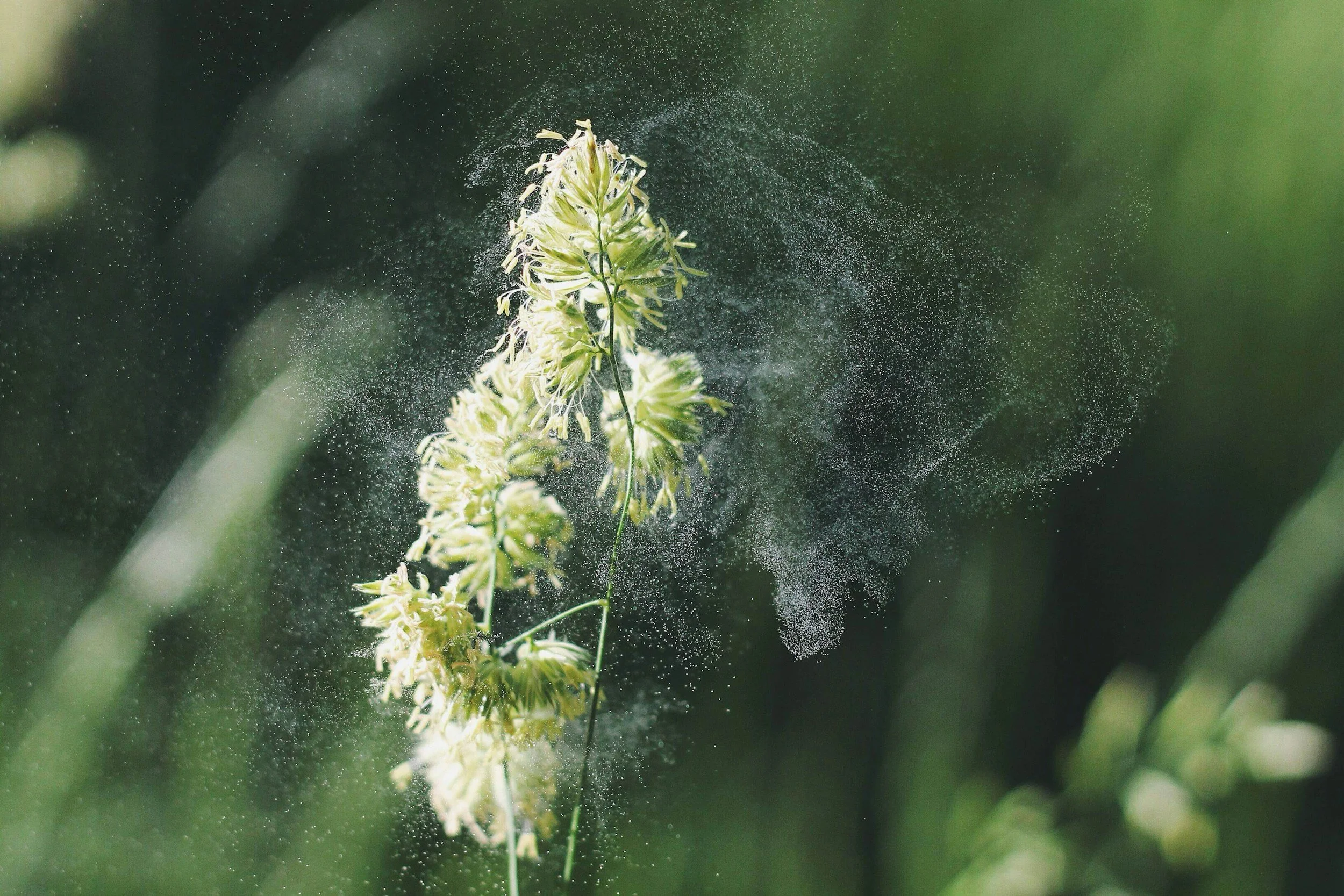
I absolutely love the kind of pollinator connection with colleagues that I've been steeped in this springtime season (aside: I'm only just this moment realizing that the pollen metaphor might also be on my mind because the pollen count has been way high here in New England this May and June).
And I am really proud of myself for doing business in ways that are aligned with my values: not turning down requests for informational interviews, offering tiered pricing for many of my services, leaning into meetings with various cohorts of people that are talking about work and support without being monetarily compensated. I'm proud of myself for leaning into that sense of abundance, even if my first inclination may be to withhold or compete.
All of this helps my work feel meaningful and wealthy in the relationship sense of the word. When I'm busy, I don't feel burned out. When I start on new projects, I don't feel overwhelmed.
And simultaneously, I remind myself that I'm not a nonprofit business here in my post-museum career. Yes, I'm likely to make my revenue goal for this year, and yes, it's bigger than last year's, which was bigger than the one from the year before. And also yes, it still needs to keep increasing in order to be a comfortable amount to live on.
I'm not ready to stop doing the things that bring the vibrant ecosystem buzz to my work. I'm also not going to paint you a falsely rosy picture that doing that work easily and fluidly translates to my pockets overflowing with dollars, either. Wealth and abundance come in many forms, it's true. I am doing my damnedest to help all those forms of abundance increase through my work, and I hope that leaning into abundance is something that can help strengthen all of our networks.
To that end, I'll wrap up on two things.
First thing:
My quarterly GRWM (Get Reflective With Me) session is coming up. In the spirit of my Rippling Year and my trust that relationship abundance tossed out into the pond will lead to unknown reverberations, I'm hosting an hour of virtual time together to reflect and wrap up your Q2.
🤔 💭 🤔 💭 🤔 💭 🤔 💭 🤔 💭 🤔 💭 🤔 💭 🤔 💭 🤔 💭 🤔
Q2 2024 GRWM Reflection Session
June 28, 11am-12pm Eastern
Come to write/draw/doodle/meditate/dance/whatever in quiet community.
Bring whatever reflection methods you like.
If you don’t have any in mind, anyone who registers will get a PDF gift from me of some suggested prompts.
In the spirit of offering abundance, this is a pay-what-you-wish gathering, so contribute however much you feel is fair as a return gesture of abundance via Ko-Fi.
🤔 💭 🤔 💭 🤔 💭 🤔 💭 🤔 💭 🤔 💭 🤔 💭 🤔 💭 🤔 💭 🤔
Second thing:
The word and definition that is staying with me from John Koenig’s The Dictionary of Obscure Sorrows.
socha: the hidden vulnerability of others
There's an optical illusion that's easy to fall for, even if you know the trick: the more distant you are from other people, the more invulnerable they appear.
You see yourself as you are, with your failures just as clear as your successes. But you see most other people on their terms-only from the side they want you to see, like a statue on a high pedestal, stoic and confident. At first glance, they've got everything figured out, with every feature set in stone, exactly as they had intended. They appear securely embedded in their community, wrapped up tightly with their loved ones. Their life seems complete, like a finished work of art.
But it's only just a trick of perspective, because you can't see the cracks from so far away. You have no way of knowing how insecure their footing might be, how malleable they really are… How many hands it takes just to get them through an ordinary day, and keep them from falling to pieces.
Each of us is only ever a work in progress; we all have weaknesses we're not sure how to fix…
Who knows why we harbor such public confidence and such private doubts?
Maybe we need to think of others as statues, and ourselves as fragile blobs of clay. Maybe that contradiction is what keeps us moving, wanting to better ourselves, and be more than what we are…
Or maybe our secret vulnerability is what draws us together. It gives each of us a primal need that only a friend can satisfy—someone you trust enough to be yourself with, who can help prop you up if needed, or remind you that you're fine the way you are. And even if you're not, that's okay, too. Nothing is set in stone.
Czech “socha”, statue. Pronounced “soh-khuh.”
Creative Prompt Coda: Find one arena of your life where you are usually led by a sense of scarcity or competition. Take one action (large or small as you like) in that arena that leans into abundance or collaboration instead.